
Indian billionaires saw their combined fortunes more than double during the COVID-19 pandemic, and their count shot up by 39 per cent to 142, while the wealth of the ten richest is enough to fund school and higher education of children in the country for 25 years, a new study showed on Monday. In its annual inequality survey released on the first day of the World Economic Forum's online Davos Agenda summit, Oxfam India further said that an additional one per cent tax on the richest 10 per cent can provide the country with nearly 17.7 lakh extra oxygen cylinders, while a similar wealth tax on the 98 richest billionaire families would finance Ayushman Bharat, the world's largest health insurance scheme, for more than seven years. The COVID-19 pandemic saw a huge rush for oxygen cylinders and insurance claims during the second wave last year.
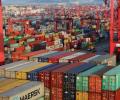
Since January this year, Indian exporters have begun to dread the shipping news. That's because most of it would be about another lot of shipping companies deciding to avoid Indian ports on account of delays.

Finance Minister Nirmala Sitharaman on Tuesday said there were visible signs of revival in the economy but the GDP growth may be in the negative zone or near zero in the current fiscal.

Beside manufacturing, deceleration was also witnessed in sectors like agriculture, construction and electricity, gas and water supply.

From the pandemic shocks to state polls to global trends, a raft of sentiment drivers are expected to steer the Indian stock market in 2022 after a historic year of massive investor returns and milestones. The Union Budget, which will be closely watched for further reform moves, and quarterly earnings of corporates will be among the developments on investors' radar amid global central banks moving towards tighter interest regime in the wake of inflationary pressures. The year 2021 was rewarding in a big way for equity investors.

India's external debt stood at $554.5 billion at end-June, recording a decrease of $3.9 billion over its level at the end of March 2020, the RBI said on Wednesday. Further, the external debt to GDP ratio increased to 21.8 per cent at June-end 2020 from 20.6 per cent as on March 31.

While most experts suggest the government loosen its purse strings and not worry about the fiscal deficit in a pandemic impacted year, it will be a tightrope walk for the government to increase spending without going overboard.
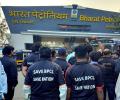
US private equity firm I Squared Capital is dropping out of the race to buy India's second-largest state oil firm, Bharat Petroleum Corporation Ltd (BPCL) owing to a complex deal structure and lack of financial backers for the transaction, sources said. I Squared Capital through its Indian arm, Think Gas was among the three suitors that had evinced interest in buying the government's near 53 per cent shareholding in BPCL. "The company has made a decision not to participate in the financial bidding," a source with direct knowledge of the development said.

Modi government's story of five years with regard to equity allocation for PSUs shows that it may have allowed a large part of its resources to be wasted. This is also a worrying reflection of the government's inability to take hard decisions - whether they pertain to privatisation or forcing weak public-sector banks to wind down their operations, says A K Bhattacharya.

Ajit Mishra, vice president, Research, Religare Broking, answers your queries.

The Indian regulatory framework forced Citi to hibernate -- contrary to the claim that it never sleeps!

From conducting merely 10 tests per day on January 30, the daily average has crossed more than 11 lakh, the ministry adding this demonstrates an exponential increase in the daily COVID-19 testing in the country.

"If we are not getting anything then I think it is end of story for Vodafone Idea," Kumar Mangalam Birla said at the HT Leadership Summit when asked about the future of Vodafone Idea in absence of a government relief on payment of Rs 53,038 crore dues.

Congress leader and ex-finance minister P Chidambaram on Tuesday said the Union Budget was the "most capitalist" with nothing for the poor and farmers while sops were being provided to big industrialists turning India into a very "unequal country". At a press conference after Union Finance Minister Nirmala Sitharaman unveiled a Rs 39.45 lakh crore Budget, he said because of the ruling party's "brute majority" the Lok Sabha pass the Budget but people will reject it. He claimed the Bharatiya Janata Party was going to elections, scheduled in five states, not with their performance or with the promises and assurances to the people, but solely "with the agenda of dividing the country and bringing Hindutva back to power".

The central government is likely to exceed the budgeted tax collection target of Rs 22.2 trillion for the current fiscal year, led by better indirect tax mop-up, compliance measures, and recovery in most sectors following the second wave of the Covid pandemic. Personal income and corporate tax collections (net of refunds) grew 74 per cent to Rs 5.70 trillion in the first half of the current financial year, driven mainly by advance tax and TDS payments. The target for the current fiscal year is Rs 11.08 trillion; higher taxes are paid usually towards the end of a fiscal year.

Equity investors should thank cash-rich biggies such as TCS, ITC, HUL, Nestl, and Bajaj Auto for this.

The 50-share Nifty scaled a high of 10,207.90 intra-day but succumbed to profit-booking to finish at 10,184.15, up 53.50 points
Other major laggards were IndusInd Bank, SBI, Bharti Airtel, ONGC, Tata Steel and Reliance Industries -- falling as much as 6.30 per cent.
More than 90 per cent stocks in the NSE 500 universe are currently trading above their 200-day moving average (DMA). Experts say this is a sign that the market has become overheated and can lead to a correction or sideways movement for a long period. The 200-DMA is a key technical indicator used by traders to get a sense of market direction. A level, which is roughly a 40-week average, often acts as key support or resistance.
The biggest losers in the Sensex pack were Vedanta, Tata Steel, M&M, Tata Motors, Maruti, Hero MotoCorp, PowerGrid, Bharti Airtel, SBI and Coal India -- falling up to 4.48 per cent.

Are we seeing a replay of March 2000? What are the similarities and differences and how worried should we be, asks Akash Prakash.

Here's the full text of President's Ram Nath Kovind's address to the joint sitting of both houses of Parliament on the first of Budget Session 2022.
UltraTech Cement was the top gainer in the Sensex pack, rising 3.06 per cent, followed by IndusInd Bank, ICICI Bank, HDFC Bank, Titan, Axis Bank, SBI and Reliance Industries. NSE Nifty advanced 78.35 pointsto close at 14,814.75.
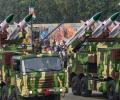
In the Union Budget presented in Parliament by Finance Minister Nirmala Sitharaman, a total of Rs 1,52,369 crore has been set aside for capital expenditure that includes purchasing new weapons, aircraft, warships and other military hardware.
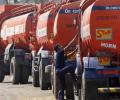
Every time the Indian economy has faced headwinds due to international developments, the oil sector has played a crucial role, explains A K Bhattacharya.
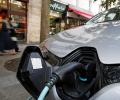
Society of Manufacturers of Electric Vehicle (SMEV) on Thursday said sales of EVs in India fell 20 per cent in the financial year 2020-21 to 236,802 units. In 2019-20 sales of electric vehicles (EVs), including electric two-wheelers (E2W), electric three-wheelers (E3W) and electric four-wheelers (E4W), stood at 295,683 units. For FY21, the E2W segment sales declined by 6 per cent to 143,837 units, as compared to 152,000 units in FY20, SMEV said in a statement, adding that the FY21 E2W sales included 40,836 high-speed and 103,000 low-speed E2W. The E3W segment registered sales of 88,378 units as against 140,683 units sold in FY20.

Top gainers in the Sensex pack included Bharti Airtel, Tata Motors, IndusInd Bank, Kotak Bank, Hero MotoCorp, Asian Paints and PowerGrid, which rose up to 2.53 per cent.
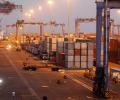
According to Ajai Sahai, director-general and CEO of Federation of Indian Export Organisations, rising cases are a cause for concern as it adds to the uncertainty and may impact exports.

Management campuses are expecting the rise in pre-placement offers to ease the final placement process.

The cumulative tests conducted so far for detection of coronavirus infection in the country has increased to 3,26,61,252.

The all-time high price of silver is Rs 75,000 a kg, recorded in April 2011.

Omkeshwar Singh, head, Rank MF, a mutual fund investment platform, answers your queries.

China's GDP jumped a record 18.3 per cent in the first quarter of 2021, riding on strong domestic and foreign demand and aided by recovery from a low base in early 2020 when Covid-19 stalled the world's second-largest economy, according to statistics released on Friday.
RBI Governor Shaktikanta Das on Thursday said financial inclusion will continue to be a "policy priority" for the central bank to make the post-pandemic recovery more equitable and sustainable. The Reserve Bank of India will very soon be coming out with the first financial inclusion index, which will assess progress in terms of access, usage and quality, Das said, while speaking at the Economic Times Financial Inclusion Summit. It is the responsibility of all stakeholders to ensure that the financial ecosystem (including the digital medium) is inclusive and capable of effectively addressing risks like mis-selling, cybersecurity, data privacy and promoting trust in the financial system through appropriate financial education and awareness, he added.

If the BJP is set to return to power in UP, Uttarakhand, Manipur and even Goa, it is not because of the party's performance or the quality of governance. No. It is essentially Modi's popularity, observes Virendra Kapoor.

After swinging nearly 330 points, BSE Sensex finished 172.69 points or 0.43 per cent higher at 40,412.57. Similarly, the 50-scrip NSE Nifty appreciated 53.35 points or 0.45 per cent to close at 11,910.15.
Amid record-high fuel prices, Finance Minister Nirmala Sitharaman on Monday said there is no proposal as of now to bring crude oil, petrol, diesel, jet fuel (ATF) and natural gas under the Goods and Services Tax (GST). When the GST was introduced on July 1, 2017, amalgamating over a dozen central and state levies, five commodities - crude oil, natural gas, petrol, diesel, and aviation turbine fuel (ATF) - were kept out of its purview given the revenue dependence of the central and state governments on this sector. This meant that the central government continued to levy excise duty on them while state governments charged VAT. These taxes, with excise duty, in particular, have been raised periodically.
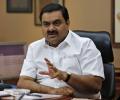
India produced 179 more super-rich people this year led by Adani Group's Gautam Adani who amassed a whopping wealth of Rs 365,700 crore or more than Rs 1,000 crore daily, and the number of such individuals has crossed the 1,000-mark. Geographically, five more cities are home to super-rich taking the total number of super-rich cities to 119 and these 1,007 individuals cumulatively added 51 per cent more wealth in 2021. The average wealth increased by 25 per cent this year that also saw the livelihoods of thousands of people being hit by the coronavirus pandemic.

According to a new survey, over 80 per cent Indian engineers and tech graduates are currently learning new technologies relevant to the jobs they seek.

Yes Bank was the biggest gainer in the Sensex pack, rallying 11.48 per cent amid reports that private equity firms have showed interest in buying a major stake in the private sector lender.
